Automation · Facility monitoring
Control Room: keeping the warehouse in view
AGVs, cleaning robots, the WMS and automation: a monitoring station that helps teams understand alarms in their operational context and contact technicians immediately.
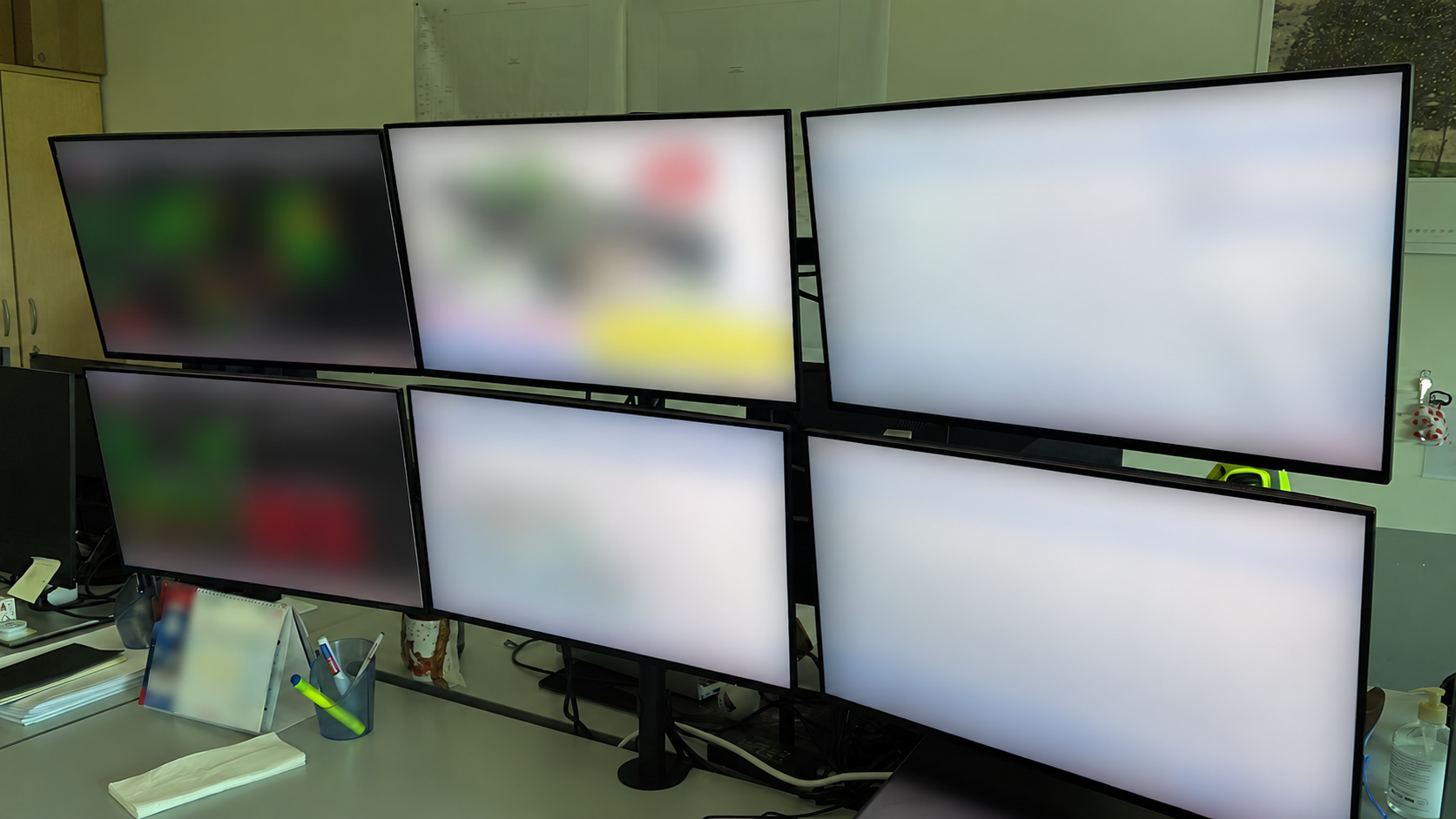
01 / Seeing the whole operation
In an automated warehouse, a local fault can affect downstream activities. For the people managing flow, knowing that a machine is in alarm is not enough: they need to understand where the issue is and which part of the operation needs attention.
Through this project, we created a control room dedicated to facility monitoring. The multi-screen workstation brings system views together, giving flow managers an overview that is also accessible remotely. Its value lies in the ability to observe the warehouse and coordinate a response without relying solely on individual notifications arriving.
02 / What we monitor
Monitoring covers four technology areas and alarms across the warehouse. Existing system views are displayed alongside one another; this does not mean replacing those applications with a new control system.
AGVs
The status of automated guided vehicles and issues requiring attention in internal material handling.
Cleaning robots
Robot operating status and notifications, included in the wider view of warehouse activity.
WMS
Access to the warehouse management system to relate operational records to what is happening on the floor.
PLCs and automation
Visibility of status information and alarms exposed by the supervision systems for PLC-controlled automation.
03 / From an alarm to a technician
The most tangible change is in the flow managers’ work: they can view alarms remotely and call technicians in real time, even before those technicians have received the corresponding alert.
Detect
The flow manager sees the notification in the relevant system view.
Understand
They identify the affected area and relate the issue to the current operational flow.
Contact
They call a technician and share the available context, without necessarily waiting for an automated notification.
Follow
Visibility of the facility helps them follow developments while qualified personnel handle the intervention.
04 / A workstation and a different way of working
Preparation also covered the practical elements of the workstation: monitors, mounts, a computer, a docking station and application access. The equipment is the starting point; what matters is making information useful to the people managing flow every day.
Placing the views alongside one another helps connect an individual alarm with its operational context. The flow manager becomes a link between what the systems show and the people who can act. This is a coordination capability, not simply a wall of monitors.
05 / The value and the boundaries
For us, this was a major step towards keeping the warehouse under control: broader visibility of issues and a direct channel to involve technicians. Being able to spot an issue before its intended recipient receives the alert is the project's clearest operational benefit.
The control room is described here as a monitoring and coordination function: remote visibility does not mean remote machine control. It does not replace safety procedures, maintenance expertise or equipment safeguards.
I do not claim unmeasured reductions in downtime or response times. Quantifying those effects would require comparing detection, contact, acknowledgement and recovery across comparable events. This account describes the operational capability delivered, not an estimated financial return.
Better visibility, a coordinated response
The control room brings what is happening in the facility into daily flow management. Its contribution is to connect technical visibility with operational coordination: see the issue, understand its context and quickly connect the right people.
Project note
Based on the author's experience and the Control Room project's workstation planning notes. Editorial date: February 2026. Costs, accounts, internal configurations and correspondence are not published.