In-house project · Software development · Logistics
EPAL Management: my idea becomes a portal for pallet exchange
I conceived and built EPAL Management to bring movements, vouchers, balances and collection requests into one place. Developed in-house with support from Codex, the published solution connects warehouse work with document management.
These figures describe functional scope, not measured savings or productivity gains. Values shown in testing screens are not presented as project KPIs.
01 / From field experience to a solution of my own
The project grew out of my logistics work at C&M, the joint venture between CEVA Logistics and Messaggerie Libri. I turned an operational need into a portal concept and built the solution, translating the workflow into functions and application rules.
Codex supported development. The idea, functional choices and implementation are mine: understanding people’s work and translating it into a usable tool was the starting point.
02 / A pallet is more than a warehouse quantity
Physical pallet movements and the position owed to a counterparty are connected, but they are not the same. Knowing the stock on hand does not tell us which pallets must be returned, which movements have been validated or which vouchers remain open.
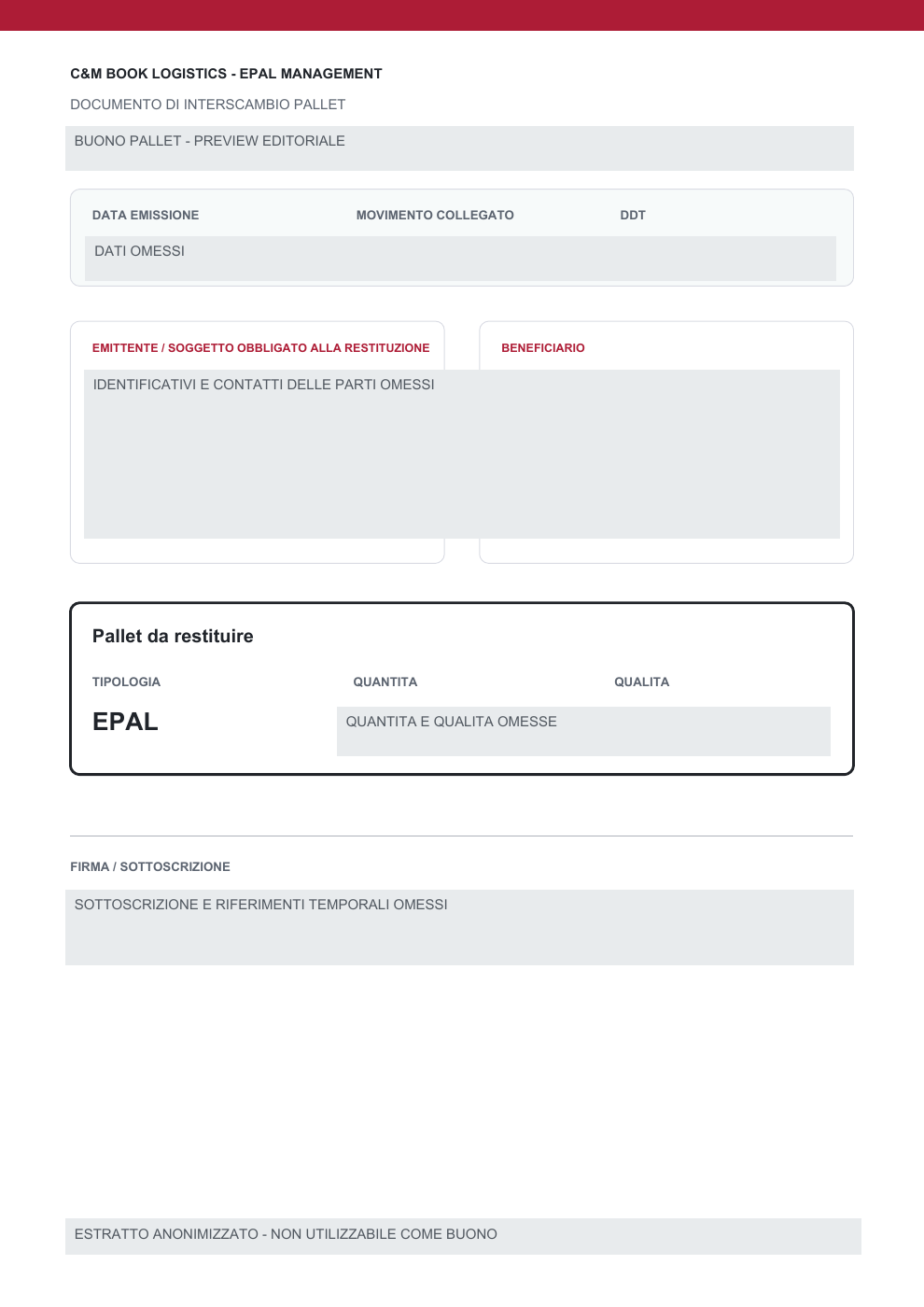
I organised the solution around three elements: a movement records the operation, a voucher documents the associated return obligation, and a balance shows the position by supplier. Connecting them helps reconstruct the process and identify outstanding work.
03 / From movement to voucher to balance
Movements brings together registration, search and validation. Filters by period, warehouse, supplier, carrier, movement type and status, along with Excel, CSV and PDF exports, support operational checks.
Vouchers organises generation from validated movements and fulfilment by supplier. The documented rule allows one voucher per movement: its connection to the operation and transport document is central to traceability.
Movement Balances consolidates the position by counterparty, with period-based extracts and dossiers. A summary balance remains linked to the operations that produced it.
04 / Booking a collection is not completing it
Collection requests move through entered, seen and handled statuses. This makes responsibility for the request visible and distinguishes the supplier’s request from completion of the work.
Changing a booking status neither creates nor changes pallet movements. This is an important distinction: progressing a request must not be confused with recording a physical return.
05 / Eight areas, one shared process
Dashboard, movements, vouchers, movement balances, collection bookings, master data, users and administration make up the documented scope. The dashboard brings together operational indicators, recent activity and a priority queue.
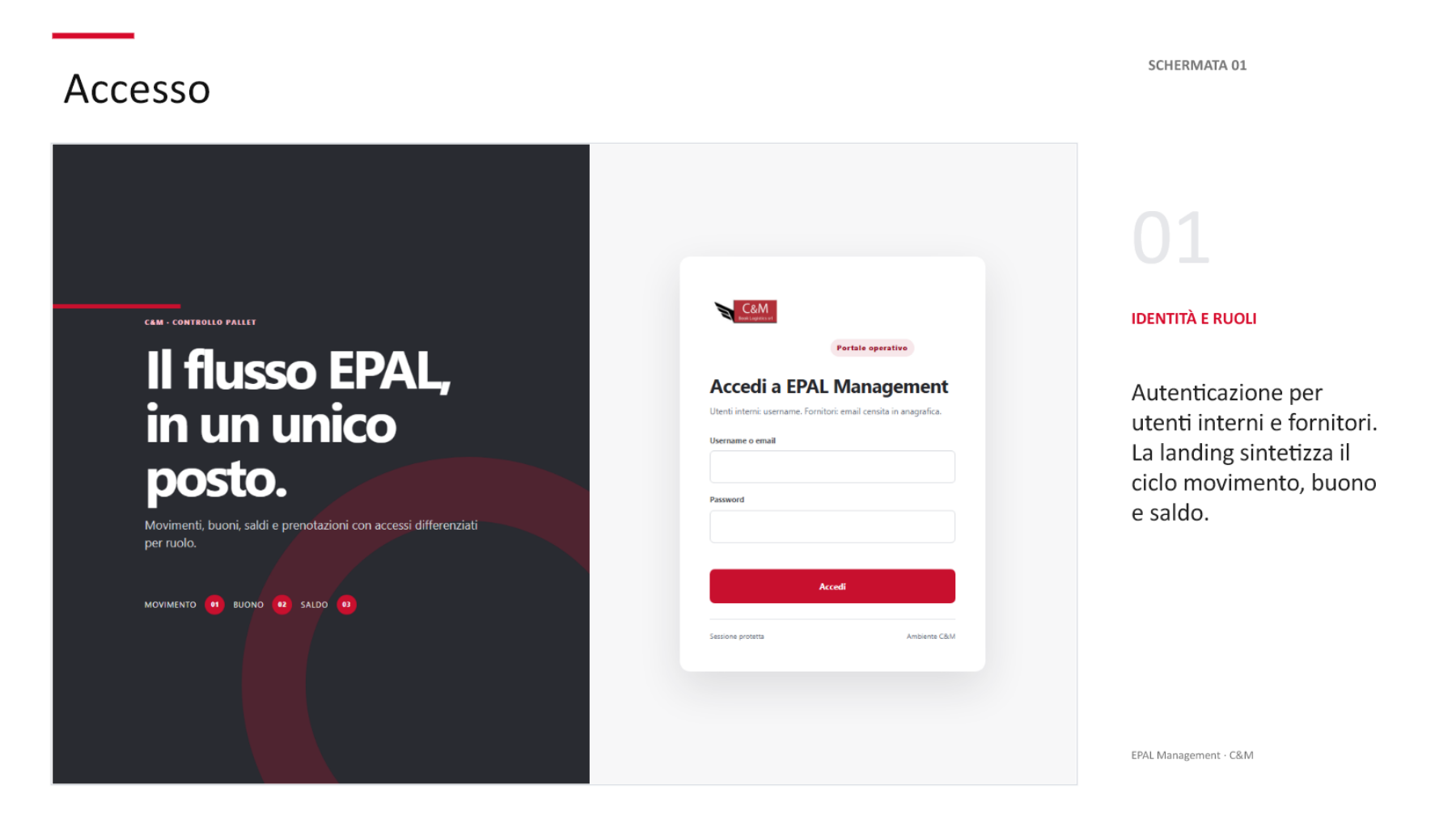
Master data brings warehouses, suppliers, carriers and operational classifications together. Users and administration organise roles, access and application rules. The portal distinguishes internal-user access from supplier access.
The intended benefit is a more organised, traceable process. Demonstrating reductions in time, errors or cost requires comparable measurements before and after launch; no unmeasured improvement percentages are claimed.
From the portal to the exchange document
06 / Regulatory context and the portal’s role
The context is Italy’s pallet exchange system under Articles 17-bis and 17-ter of Decree-Law 21/2022, converted by Law 51/2022 and amended by Law 182/2025. Within its scope, a voucher containing the required information and signature must be issued at the time of delivery when immediate exchange is not possible. The provision also envisages digital-only vouchers after a 24-month transition from its entry into force.
The industry associations’ guidelines provide operational guidance and are not binding. They also address participant identity, transaction integrity, signatures and interoperability of digital vouchers.
EPAL Management is presented as a management and traceability tool, not a certification of compliance. A PDF or a signature recorded in the system alone does not establish the legal validity of the entire process. Signing methods, issue timing and applicable requirements need specific review by the responsible specialists.
Understand the process. Build the tool.
For me, EPAL Management is the move from analysis to implementation: a portal I conceived and built with Codex support to make the relationship between operations, documents and pallet positions visible. Innovation comes from combining logistics experience with the ability to turn a concrete need into software.
Materials and confidentiality
Application screenbook, documented portal structure, sample voucher and author’s update. External commercial proposals are not presented as internally developed components. Credentials, live balances, counterparty data, quotations and original documents are not published. Regulatory references provide project context, not legal advice.