Field project · Industrial robotics
KEMARO K900: cleaning in highly automated areas
A project addressing a practical need: removing dust and debris from shuttle areas, including hard-to-reach spaces. Our experience with KEMARO and the support of Magris, a valuable partner.
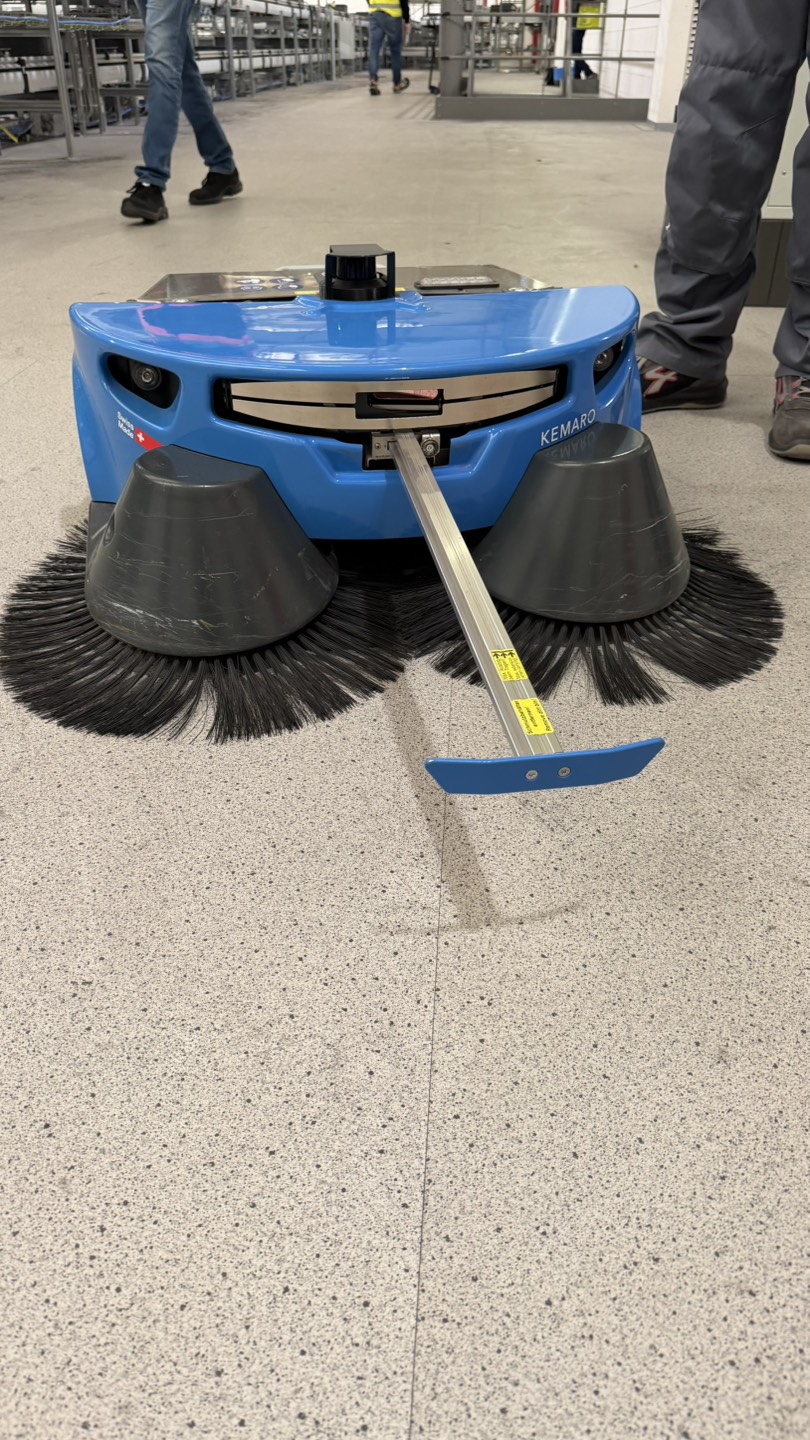
Scope comes from the project. Height and cleaning technology are product specifications, not measured pilot performance.
Bring cleaning into highly automated areas while reducing reliance on manual interventions and dedicated shutdowns.
Paraphrased project objective from the internal presentation
01 / A less visible, very real operational need
In automated logistics facilities, cleaning has to work around structures, conveyors and restricted-access areas. Dust also builds up where manual intervention is difficult to organise. This affects the working environment and the planning of activities around the equipment.
The project covered two shuttle areas. The starting model described in the presentation involved two deep-cleaning interventions per year, with dedicated shutdowns. The objective was to assess a more frequent, scheduled alternative and verify technical feasibility and operating requirements on site.
02 / Why the K900 impressed us
For me, the KEMARO K900 was an outstanding product for this application. Its strength lies in its compact dimensions, dry debris collection and autonomous navigation: capabilities that directly address the problem we wanted to solve.
The machine collects dust and small debris without water or detergents. LiDAR and 3D sensors support navigation. Zone and time scheduling, together with monitoring through KEMARO Sphere, help make the robot part of an organised process. Its low profile is particularly relevant beneath structures, subject to verifying the actual clearance.
03 / The on-site trial and what we observed
The demonstration brought the robot into the real operating environment, with routes around conveyors, actual floor conditions and existing debris. The photographs show the machine in operation and a visible contrast between a cleaned patch and an area where debris remains.
This is useful qualitative evidence and explains our enthusiasm. It is not a quantified dust-reduction test or a measurement of annual savings. Such conclusions would require comparable measurements, actual operating hours, completed missions and records of operator interventions.
Photographs from the field trial
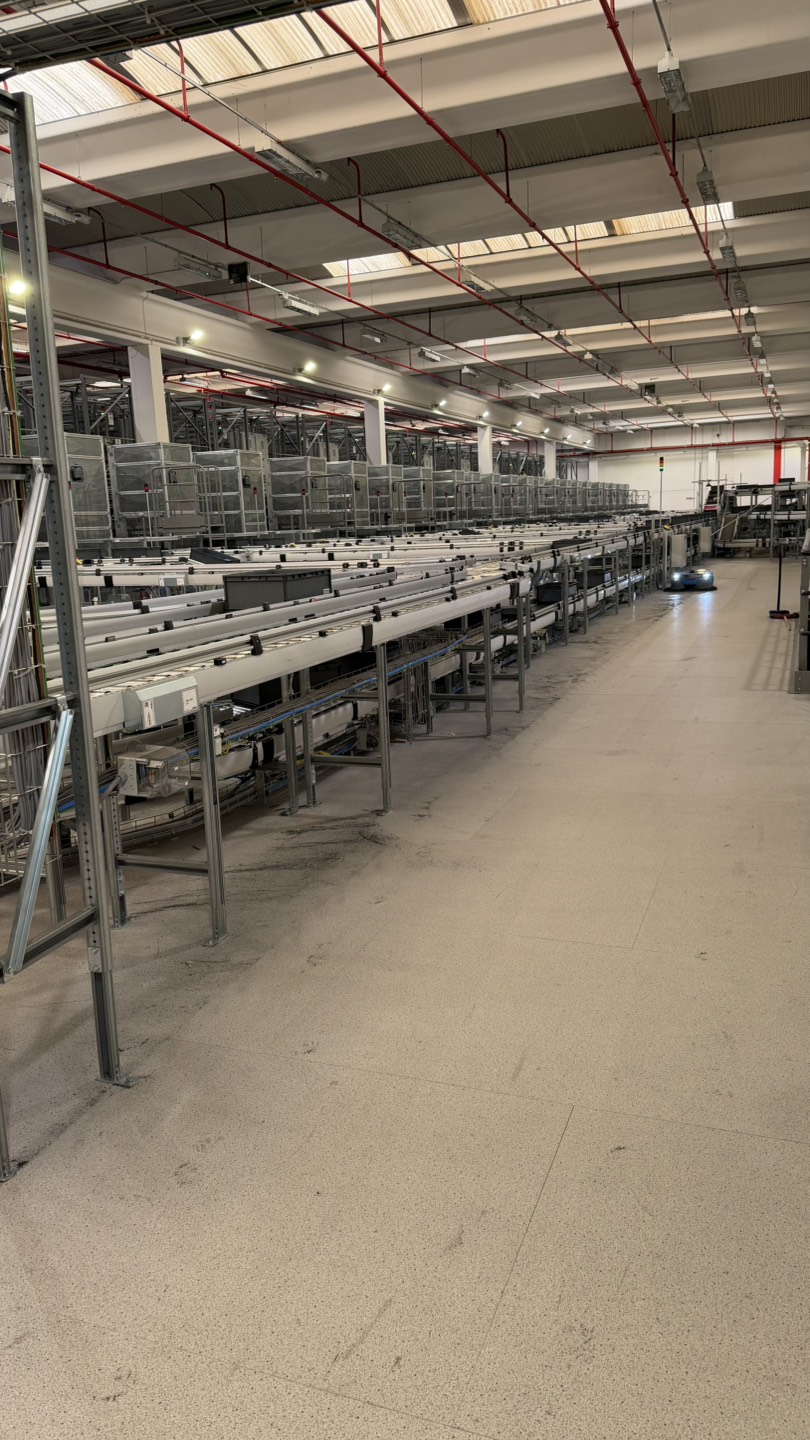
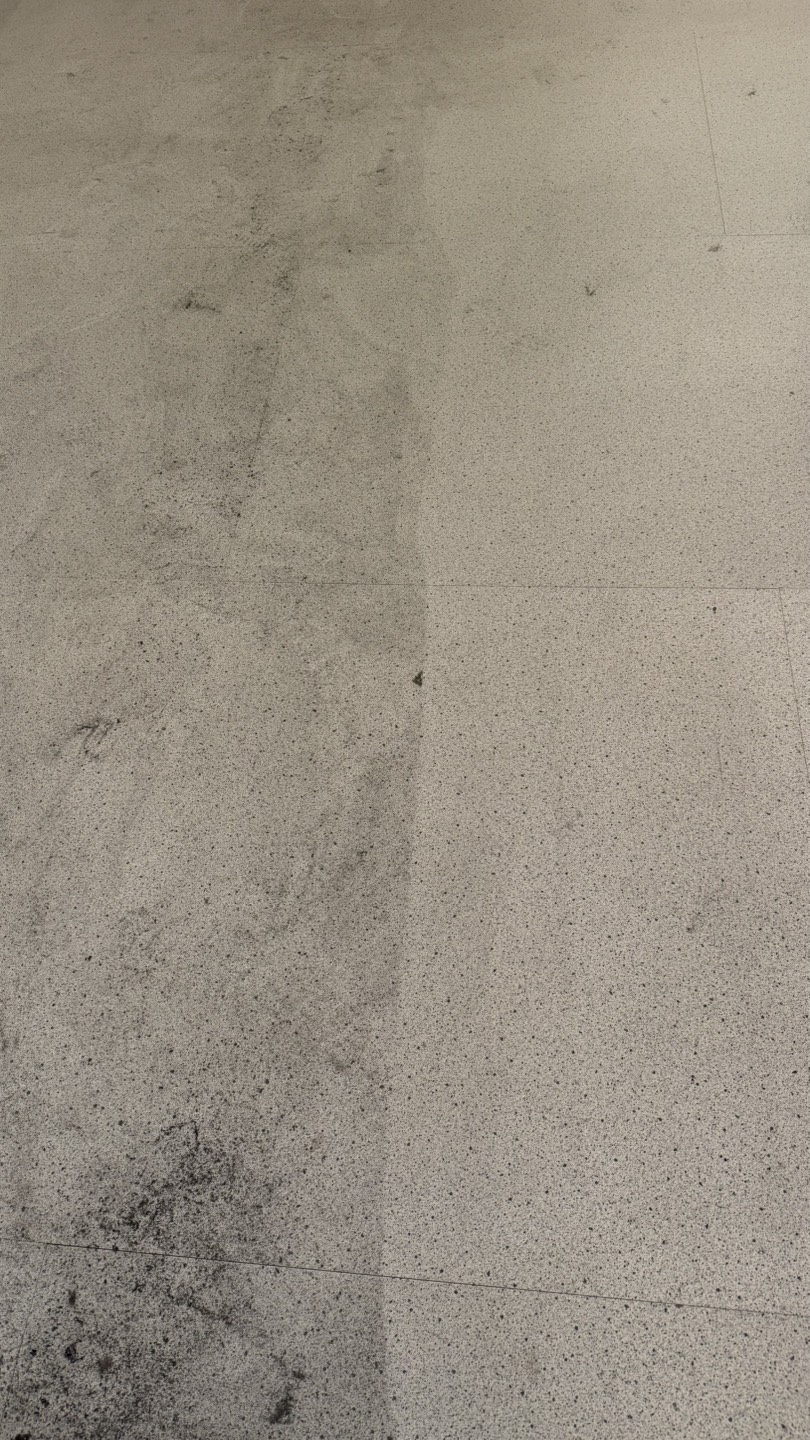
Original project photographs. Facility layouts, navigation maps, operational-system screenshots and commercial documents are not published.
Product specifications
Nominal values from the supplied K900 Gen II factsheet. Actual performance and configuration depend on the environment; these are not results measured in our project.
| Feature | Declared value | Application relevance |
|---|---|---|
| Dimensions | 79 × 72 × 35 cm | Check clearances and passages beneath structures. |
| Cleaning width | 90 cm | A parameter for defining zones and routes. |
| Dust container | 35 L | Emptying frequency depends on collected debris. |
| Nominal capacity | Up to 1,000 m²/h | A stated upper value, not measured pilot throughput. |
| Recharging | Approx. 90 min | To be included in mission planning. |
04 / Autonomy still needs an operating method
The operating rules prepared for the project complement the technology: emptying the container after sessions, inspecting brushes, maintaining filters and sensors, and keeping charging access clear. During initial operation, accumulated debris may require more frequent checks.
Organising these activities supports everyday use. Maintenance, transport and access to automated areas remain subject to manufacturer instructions and site safety procedures. The robot does not remove the need to manage the process.
KEMARO and Magris: technology and partnership
Recognition goes to KEMARO AG for its product and support, and to Magris, an Italian reseller and our partner on this project. In our experience, Magris has been an excellent partner. The value of an industrial solution also depends on the relationship with the people who bring it into the operating environment.
An experience worth sharing
This project stood out to me because it addresses an everyday automation challenge with a practical product. Our experience with the K900 was very positive. Supporting that quality with scheduling, clear operating responsibilities and measurement over time is what turns a promising trial into a stable process.
Materials and sources
Based on the internal CleaningMachine presentation, demonstration photographs, supplied operating rules and K900 Gen II factsheet. Product and partner assessments reflect my professional experience. Commercial amounts and terms, signed documents, personal data and material marked confidential are excluded. No savings percentage or downtime reduction is presented as an achieved result.
K900 specifications on the KEMARO website ↗